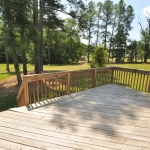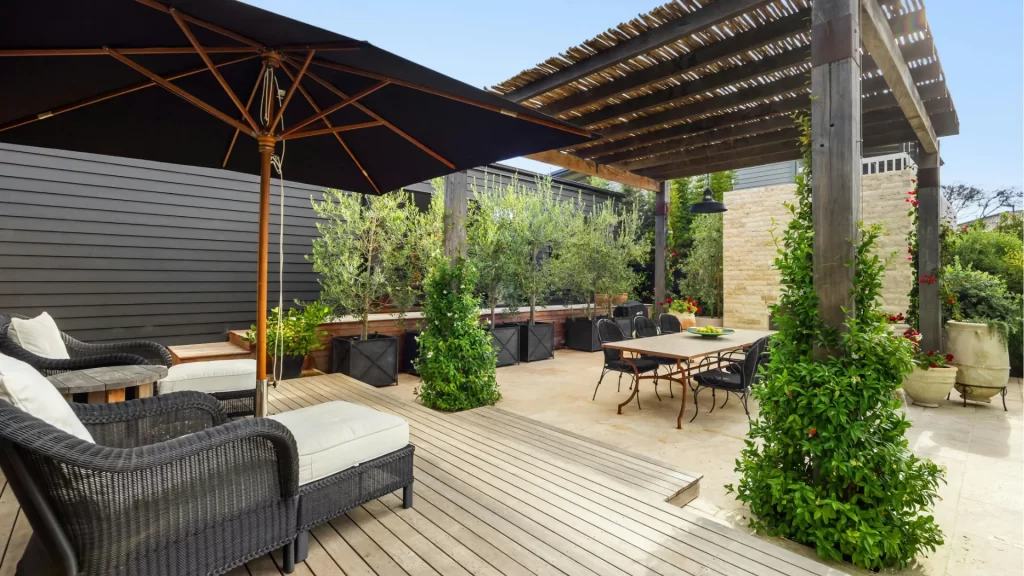
Outdoor living is a big part of Melbourne homes. A deck creates space for family time, barbecues and quiet evenings outdoors. It also adds real value to your property.
When you start planning a new deck, one question comes up first: timber or composite? Both materials are common across Melbourne and both have genuine advantages. Timber gives you a natural look and feel. Composite gives you low maintenance and long-term consistency.
This guide compares timber and composite decking on cost, durability, comfort, structure, compliance and climate performance, with a focus on what actually matters for Melbourne’s weather and building rules. By the end, you’ll know which material fits your home, your budget and how much time you want to spend on upkeep.
Quick Answer
If you want the lowest upfront cost and don’t mind annual maintenance, timber is the better fit. If you want a deck that needs almost no upkeep and can handle Melbourne’s UV and rain cycles without attention, composite is the stronger long-term choice. Composite also performs better around pools and in high-moisture areas. Timber stays cooler underfoot and suits homeowners who want a natural, evolving look.
Timber vs Composite Decking: Quick Comparison
| Factor | Timber Decking | Composite Decking |
|---|---|---|
| Material | Natural hardwoods (Spotted Gum, Jarrah, Merbau, Blackbutt) or treated pine | Recycled wood fibres and plastic, usually capped for UV resistance |
| Cost | Roughly $220–260/m² installed | Roughly $350–500/m² installed |
| Maintenance | Annual sanding, oiling and sealing | Occasional cleaning only |
| Durability | Can warp, fade or splinter; risk of mould and termites in damp areas | Resistant to rot, pests, UV and moisture |
| Comfort underfoot | Cooler in summer, natural texture | Can heat up in direct sun, especially dark colours |
| Appearance | Natural grain, can be re-stained or painted | Wide colour range, consistent finish, cannot be re-coloured |
| Fire performance | Some species (Spotted Gum, Silvertop Ash) suit higher BAL zones | Varies by brand, check manufacturer test data |
| Sustainability | Renewable when FSC-certified | Uses recycled content, harder to recycle at end of life |
| Around pools | Needs sealing and slip treatment | Slip-resistant, no tannin bleed into pool water |
Best for…
- Timber decking: homeowners who want a natural look, don’t mind yearly maintenance, and want a lower starting price.
- Composite decking: households wanting low maintenance, consistent style, and strong performance around pools and wet areas.
In This Guide
- What Are They Made Of?
- Cost and Long-Term Value
- Durability and Maintenance
- Comfort and Liveability
- Aesthetic Appeal and Style
- What’s Under the Boards: Structure and Installation
- Bushfire Attack Level (BAL) Ratings in Melbourne
- Do You Need a Permit for a Deck in Victoria?
- Environmental Impact
- Melbourne Climate Considerations
- Best Decking for Pool Areas
- Which Is Best for Your Melbourne Home?
- FAQs
1. What Are They Made Of?
Timber Decking
Timber decking is cut from natural wood. In Melbourne, the most common hardwoods are Spotted Gum, Jarrah, Merbau and Blackbutt. Treated pine is a cheaper softwood option, but it needs more frequent care.
Each species behaves differently:
- Spotted Gum: strong and durable, with a wavy grain and warm tones. Bleeds fewer tannins than other hardwoods, which matters near pools and paving.
- Merbau: reddish-brown colour, one of the most popular and affordable hardwoods. Known for leaching tannins in its first year, which can stain nearby concrete or pool coping.
- Blackbutt: pale golden colour with good natural durability. Common in bushfire-prone areas because of its fire-resisting properties.
- Jarrah: deep red-brown colour, dense and long-wearing, but a higher-cost option.
- Treated pine: the most affordable choice. Needs regular oiling and is more prone to warping than hardwood.
Pros: natural look, cooler underfoot, can be re-stained if you want to change the colour.
Cons: needs yearly treatment, can splinter, fade or become slippery without maintenance.
Composite Decking
Composite decking blends wood fibres with recycled plastic. Most modern boards are capped with a protective outer layer that resists fading, staining and scratching.
Common brands available in Melbourne include Trex, NewTechWood, ModWood and Multiwood, each with different colour ranges, price points and warranty terms. Higher-end composite boards are designed to closely mimic the grain and colour variation of real timber.
Pros: minimal upkeep, consistent appearance, resistant to rot and pests.
Cons: higher upfront cost, can retain heat in direct sun, colour can’t be changed once installed.
2. Cost and Long-Term Value
Initial Investment
Timber is generally the cheaper option upfront. Installed costs average around $220–260 per square metre. Composite costs more to install, typically $350–500 per square metre.
Lifetime Costs
Timber needs yearly sanding, oiling and sealing. A modest deck can cost several hundred dollars a year in materials alone, plus your own time or a tradesperson’s fee. Composite only needs an occasional wash with mild soap and water.
Here’s what that looks like over a 10-year period:
| Timber Decking | Composite Decking | |
|---|---|---|
| Upfront cost (installed) | Lower | Higher |
| Annual maintenance | Oiling, sealing, cleaning | Cleaning only |
| 10-year maintenance cost | Adds up significantly | Minimal |
| Typical warranty | Not applicable (natural material) | Often 15–25 years |
| Break-even vs composite | N/A | Often within 2–3 years of avoided maintenance |
Most homeowners find composite pays for itself within two to three years through reduced maintenance, though this depends on how diligently you’d otherwise maintain a timber deck.
3. Durability and Maintenance
Timber
Melbourne’s mix of hot summers and wet winters is hard on timber. Common issues include:
- Fading under UV exposure
- Warping and cracking with temperature swings
- Mould and termites in shaded or damp areas
Without annual sealing and staining, timber loses strength and appearance quickly.
Composite
Composite is built to handle harsh conditions:
- Resistant to rot and pests
- UV-stable, so colour holds longer
- Splinter-free, which makes it safer for kids and pets
It needs no sanding, staining or sealing, just occasional cleaning. Many composite boards carry warranties of up to 25 years.
4. Comfort and Liveability
Heat Underfoot
Timber stays noticeably cooler in summer, which makes it comfortable to walk on barefoot. Composite can get much hotter in direct sun. Dark-coloured composite boards can reach surface temperatures well above 60°C on a typical 35°C Melbourne afternoon, hot enough to be uncomfortable for bare feet, kids or pets. If you’re set on composite for a sun-exposed deck, choose the lightest colour available to reduce heat absorption.
Safety and Use
Timber can become slippery when wet if it isn’t treated, and it can splinter over time. Composite boards are splinter-free and many have slip-resistant finishes built in, which makes them a safer option around pools or for families with young children.
5. Aesthetic Appeal and Style
Timber’s Natural Warmth
Timber offers genuine character. Grain patterns and colour variation give it an organic look that many homeowners prefer. Because it can be sanded, stained or painted, you can refresh the look over time or change the colour entirely.
Composite Design Options
Composite gives you a consistent, modern finish. Boards come in a wide range of colours, from natural wood tones to contemporary greys. High-end composite closely mimics timber grain without the fading or irregularities that come with a natural material. The trade-off is that you’re locked into that colour for the life of the deck.
6. What’s Under the Boards: Structure and Installation
The boards you choose affect more than the top surface. Timber and composite move differently in response to heat and moisture, and this changes how the deck needs to be framed underneath.
Joist spacing. Timber decking is typically installed with joists spaced around 450mm apart. Composite boards are more flexible and generally need closer support, often in the 300–400mm range depending on the brand and board thickness. Always check the manufacturer’s specifications before framing. Using timber spacing for composite boards can cause bounce and long-term sagging.
Expansion and gapping. Timber expands and contracts across its width. Composite expands and contracts along its length. This means composite boards need proper end gaps and, in many cases, double-joisting where two boards meet end to end, so each board end is fully supported. Getting this wrong leads to buckled boards or screws shearing off within the first year.
Ventilation and drainage. Melbourne’s clay-heavy soil, especially across the South-East growth corridor, holds moisture. A deck built low to the ground needs adequate clearance and cross-flow ventilation underneath. Without it, the underside of the boards can rot or warp while the top looks fine. For low-clearance builds, H3 or H4 treated pine bearers and joists, along with joist protection tape over exposed timber, help prevent this.
This is one of the reasons deck quality depends as much on the builder as the board. We account for these differences in every quote, regardless of which material you choose.
7. Bushfire Attack Level (BAL) Ratings in Melbourne
If your property sits near bushland, a reserve, or in an area with a bushfire overlay, your deck may need to meet a specific Bushfire Attack Level (BAL) rating under AS 3959. This applies to parts of Pakenham, Cranbourne, Clyde and other outer South-East suburbs.
Under AS 3959, certain Australian hardwoods are recognised as bushfire-resisting timbers, including Spotted Gum, Silvertop Ash and Red Ironbark among others. These species can be used in higher BAL zones without additional fire-rated treatment.
Composite decking performance varies by brand and product line. Some entry-level boards carry no formal fire rating. Others are tested and rated for specific BAL zones. If you’re building in a bushfire-prone area, ask any composite supplier for their AS 3959 test data before committing to a product.
Check your property’s BAL rating with your local council or the CFA before finalising your material choice. This isn’t a step to skip, it affects what you’re legally allowed to build.
8. Do You Need a Permit for a Deck in Victoria?
In most cases, yes. Victoria’s rules are based on whether the deck is attached to your home, and how big or high it is.
- Attached decks (connected to your house) generally need a building permit regardless of size or height.
- Freestanding decks under 10 square metres and under 800mm high are often exempt.
- Freestanding decks over 10 square metres, or over 800mm above ground, generally need a permit.
- Overlays matter too. Properties with bushfire, heritage, vegetation or erosion management overlays may need a planning permit as well, even for a modest deck.
Rules can vary slightly by council, and every site is different once you factor in slope, boundaries and existing structures. We recommend checking with your local council or a registered building surveyor before you start, and we’re happy to talk you through what your property will need.
9. Environmental Impact
Timber
Timber is a renewable resource when it’s responsibly sourced. Look for FSC (Forest Stewardship Council) certification. At the end of its life, timber can be recycled or reused in other building projects.
Composite
Composite boards use recycled plastic and reclaimed wood fibres, which helps reduce landfill waste. Recycling composite decking at end of life is harder than recycling timber, since it’s a bonded material.
10. Melbourne Climate Considerations
Melbourne combines strong UV, hot summers, cool winters and unpredictable rain, often all in the same week. This tests any outdoor material.
- Timber: comfortable underfoot, but needs consistent care to resist sun and moisture damage.
- Composite: holds up well under UV and heavy rain with little maintenance, but can run hot in full sun.
For exposed, sun-heavy backyards without shade, composite is usually the more practical option. In shaded or covered areas, timber performs well with regular maintenance.
11. Best Decking for Pool Areas
Pool surrounds put extra demands on any decking material: constant moisture, pool chemicals, bare feet and higher slip risk. This is one area where the two materials perform quite differently.
Tannin bleeding. Hardwoods like Merbau are known for leaching tannins, especially in the first year. Near a pool, this can stain coping and surrounding concrete. Spotted Gum bleeds less, but no natural timber is completely tannin-free.
Slip resistance. Composite boards are commonly manufactured with textured, slip-resistant surfaces designed for wet-area use. Oiled or unsealed timber can become slippery when wet, particularly around pool edges where feet are constantly dripping.
Splinters. Composite is splinter-free, which matters around a pool where people are barefoot most of the time. Timber can splinter as it dries out, especially if maintenance lapses.
Heat. Light-coloured composite stays reasonably comfortable, but dark composite boards can get hot enough in full sun to be uncomfortable on bare feet by the pool. Timber stays cooler, which is a genuine advantage for exposed, north-facing pool decks.
For most Melbourne pool areas, composite is the lower-maintenance and generally safer choice, particularly for families with young children. If your pool deck is shaded or partially covered, a well-maintained hardwood like Spotted Gum is still a strong option.
12. Which Is Best for Your Melbourne Home?
Choose timber if:
- You want the natural look and texture of real wood
- You don’t mind annual maintenance
- You want a lower upfront cost
Choose composite if:
- You want low-maintenance living
- Your deck gets heavy sun or rain exposure
- You want long-term durability and a consistent look
- You’re decking around a pool
FAQs
How long does timber decking last in Melbourne?
With yearly oiling and sealing, hardwood decks typically last 15–25 years. Without regular maintenance, that lifespan drops significantly.
Can composite decking fade or warp?
Quality composite boards are designed to resist fading and warping, and most come with long manufacturer warranties. Cheaper, uncapped composite is more prone to both.
Which decking is better for around pools?
Composite is generally the better choice. It resists water damage, doesn’t bleed tannins into pool water or coping, and is usually slip-resistant.
Is composite decking worth the extra cost?
For most homeowners, yes. The upfront price is higher, but reduced maintenance often balances that out within a few years, especially if you’d otherwise be paying a tradesperson to maintain a timber deck annually.
Does composite decking get too hot to walk on?
It can, particularly dark colours in direct summer sun. Lighter composite colours and shaded areas stay far more comfortable underfoot.
Can I install composite decking over an existing timber frame?
Only if the existing frame meets composite’s tighter joist spacing requirements, which are usually closer than standard timber spacing. Many older timber frames need extra joists added before composite boards can be installed safely.
Do I need a permit to build a deck in Victoria?
In most cases, yes, especially if the deck is attached to your home or exceeds 10 square metres or 800mm in height. Overlays like bushfire or heritage zones can add extra requirements. Check with your council before you start.
Is composite decking eco-friendly?
Most composite boards use recycled plastic and reclaimed wood fibres, which reduces landfill waste. It’s harder to recycle at end of life than timber, so the full picture depends on how you weigh manufacturing against end-of-life impact.
Conclusion
The timber vs composite decision comes down to how much time you want to spend maintaining your deck, your budget, and where the deck sits on your property. Timber gives you natural warmth and a lower starting price, but needs yearly care. Composite costs more upfront but holds up with almost no maintenance, and performs especially well around pools and in full sun.
The material matters, but so does the team that installs it. We’re P&P Decking, Melbourne’s South-East specialists in both timber decking and composite decking. We’ve built decks across Berwick, Beaconsfield, Cranbourne, Narre Warren, Pakenham, Clyde and Officer, and we can help you weigh up the right material for your site, your budget and your maintenance appetite.
Get in touch for a free quote, whichever way you’re leaning.